


Lullabies: More Than a Sleep Trick
Sleep. Sweet, elusive sleep.
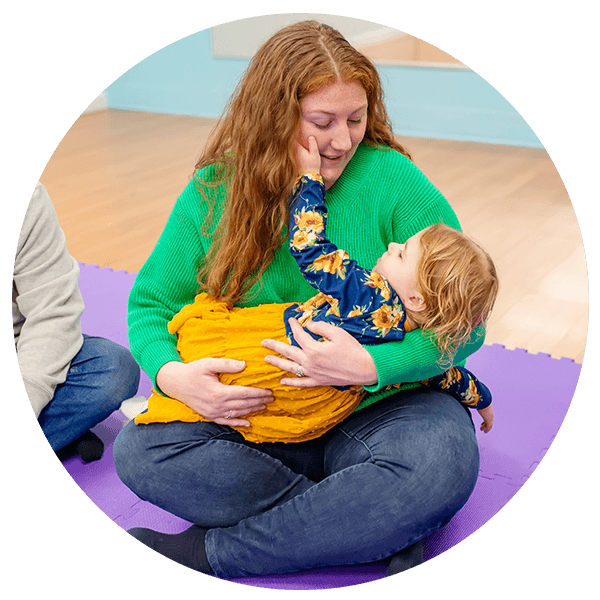
If you have young children, you’ve probably spent at least one night (or . . . many) wishing for a magical, guaranteed way to make bedtime just work. We wish we had that for you.
But here’s something that does help—over time, in real life, and in ways that go far beyond sleep: lullabies.
At the end of every Music Together® class, right before “Goodbye, So Long, Farewell,” we sing a lullaby. And there’s a reason for that.
After all the playful and lively activity, a lullaby helps everyone settle. You’ll see it happen: the room softens, bodies slow, and even the busiest little explorers find their way back to you for a snuggle. This class ritual signals a transition to your child.
And when you bring the ritual home? That’s where the magic really builds.
Calm isn’t just a moment. It’s a skill.
You’ve probably heard your teacher say lullabies help children calm down when they need a little reset. That’s not just a nice idea. It’s grounded in research about how the brain works.
Music engages multiple parts of the brain, and the slow, gentle rhythm of a lullaby supports your child’s developing ability to self-regulate, gently guiding their body toward a calmer state.
With repetition, these shared musical moments become familiar and predictable. Your child begins to associate your soft singing, and the shift in energy with the slower tempo and rhythm of the lullaby, with comfort and safety.
In other words, lullabies aren’t just soothing in the moment. They’re helping lay the foundation for self-regulation over time, as repeated musical experiences help strengthen the neural pathways connected to comfort, connection, and calm.
And here’s the part we don’t talk about enough: It works for you, too.
When you slow your voice, your breathing often follows. Your body settles. Over time, your brain begins to link these moments: music, closeness, calm.
So yes, this is for your child. It is also for the parent who has had a long day.
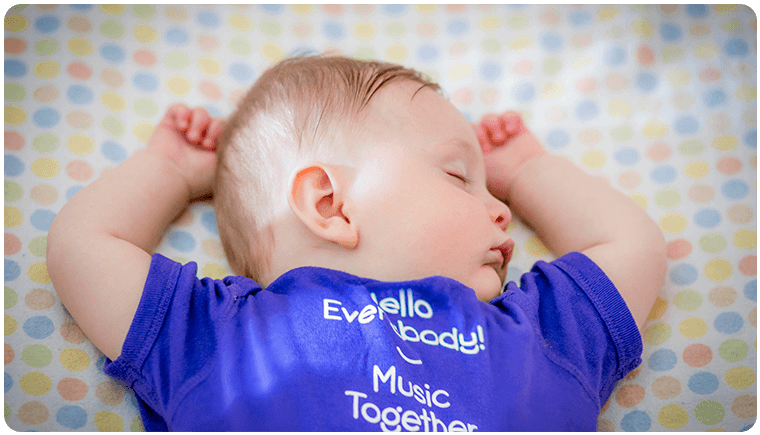
Your voice = their favorite sound (even on those days)
Your child is wired to respond to you. Your voice, specifically. Even if it doesn’t feel like it when they ignore you the third time you ask them to put on shoes.
Research suggests that music can help synchronize breathing and heart rates. So, singing lullabies to your little one is a simple, powerful way to get close. It’s connection on a biological level, not just an emotional one.
And no, you don’t need to be “good” at singing. To your child, you already are.
What you can try:
- Swap in your child’s name when singing; it instantly becomes their song.
- Try humming instead of singing words for a softer, more intimate feel.
- Hold, rock, sit close, and just notice the moment.
- Use a lullaby outside of bedtime, when things feel a little . . . extra.
Rituals that actually stick (even when you’re exhausted)
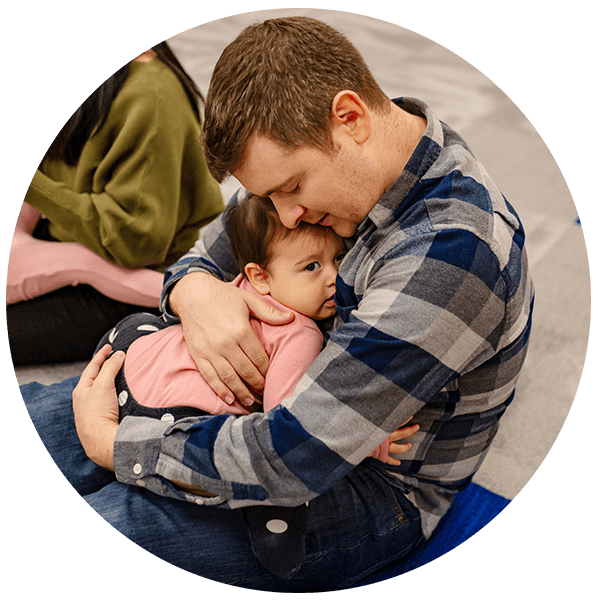
Here’s where lullabies really shine: with consistency. Back to your Music Together class for a moment. In class, the lullaby is an important ritual. When you bring the ritual home and sing lullabies at bedtime or naptime, it becomes a predictable signal. Over time, your child starts to recognize: this is what winding down feels like.
Here comes some science again: Consistent rituals help kids feel safe, which supports a calmer state. And remember, your lullaby ritual is helping your child learn to recognize and return to a sense of calm over time.
And yes, we know. Some nights you’re running on fumes. Those are the nights when having something simple and familiar helps the most.
What you can try:
- Try to set aside the same time every day and choose one lullaby to use consistently. (Tip: Build it into your bedtime routine.)
- Start with the lullabies from your current Music Together song collection. (You can also stream Music Together® Lullabies on your favorite streaming app.)
- Remember, any song can become a lullaby when you slow it down. You’ve got this.
So... will it help them sleep?
Yes! Plus, singing lullabies together also supports your child’s brain development, strengthens your bond, and creates a sense of safety they can return to again and again. There’s a reason every culture in the world has some version of a lullaby. This isn’t new. It’s deeply human.
So whether it’s bedtime, naptime, or one of those moments when everything feels a little frayed, try singing a lullaby. Not perfectly. Not for performance. Just for connection. The more you do it, the more natural it becomes.
And yes, there’s a decent chance it might even lead to a little more sleep.
Sources:
Good Neuroscience/Good Parenting Science. “Lullabies Do More Than Help Babies Fall Asleep. They Shape How Their Brains Learn To Relax.” Instagram post, April 2026. Instagram. https://www.instagram.com/p/DXsXDS4iOqM/?utm_source=ig_web_copy_link&igsh=MzRlODBiNWFlZA
Haslbeck, Friederike B., et al. “Music from the Very Beginning—A Neuroscience—Based Framework for Music as Therapy for Preterm Infants and Their Parents.” Frontiers in Behavioral Neuroscience 12 (2018). https://doi.org/10.3389/fnbeh.2018.00112.
Mehr, Samuel A., et al. “Universality and Diversity in Human Song.” Science 366, no. 6468 (2019). https://doi.org/10.1126/science.aax0868.
Trainor, Laurel J., and Teresa Nakra. “The Educational Neuroscience Perspective of ABR and Lullabies: Setting Up an Infants Brain Development Study.” International Journal of Childhood Developmental Science and Education 8 (2017): 1–7. https://infonomics-society.org/wp-content/uploads/ijcdse/published-papers/volume-8-2017/The-Educational-Neuroscience-Perspective-of-ABR-and-Lullabies.pdf.
Cirelli, Laura K., et al. “Sing to Me, Baby: Infants Show Neural Tracking and Rhythmic Movements to Live and Dynamic Maternal Singing.” Music & Science 6 (2023): 1–7. https://doi.org/10.1016/j.isci.2023.106984.
Music Together® Lullabies. Princeton, NJ: Music Together LLC, © 2022.