


Your toddler or preschooler looks up at you and says (or, let’s face it, demands), “Play with me!” Whether it’s after school, during a playdate, or just an afternoon at home, sometimes you need a new activity that everyone will actually want to do together.
Try adding some music.
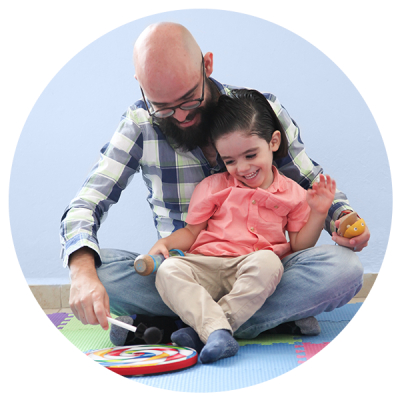
Musical games are an easy, screen-free way to get everyone moving, laughing, and connecting. There’s a lot happening while you play, too. Musical play is naturally multisensory, engaging children through listening, movement, sight, and touch. And it can support their physical, cognitive, social-emotional, language, and music development.
For over 40 years, Music Together® teachers have been sharing music activities with young children and their families in class—and giving parents ideas for keeping the fun going at home.
Here are five favorites to try with your family.
Freeze Dance
Turn on some music and invite everyone to dance. Then, pause the music at any time…and freeze! Start it again and keep dancing. Try it with different kinds of music, too. An up-tempo song creates a very different movement experience from one that’s slow and smooth.
Did you know? “Freezing” when the music stops gives your child a chance to practice inhibitory control—the ability to stop an action they’ve already started. It’s one of a set of important skills known as executive functions that develop rapidly throughout early childhood. (Learn more about how music supports executive function.)
Mirror Game
Sit across from your child and ask them to be the “mirror” while you’re the “leader.” As you sing a call-and-response song like “Stick Tune” (available to stream as part of the Family Favorites collection), make a simple movement and invite your child to imitate you. Then switch roles and let your child lead. With older children, experiment with more complex movements, like moving several body parts at once.
Did you know? Following another person’s movements takes concentration! Your child is also practicing skills like taking turns, spatial awareness, and understanding personal space. And when it’s their turn to lead, having their ideas followed can help build leadership skills and confidence.
Pass the Beat
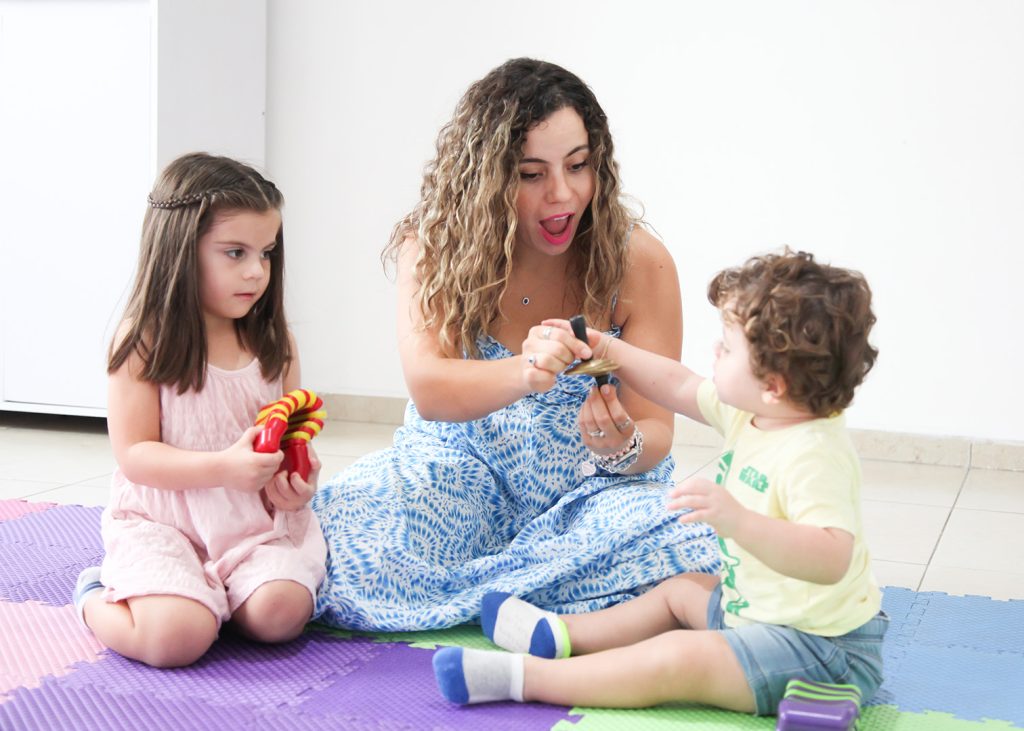
Grab an object that’s easy to pass: an egg shaker, ball, small stuffed animal, or favorite figurine all work. Sit in a circle, put on some music (or start singing!), and pass the object around the circle to the beat. Start by passing on the song’s “big beat” (macrobeat). Then try the faster “small beat” (microbeat). You can also change direction or, with older children, try tossing a ball back and forth to the beat.
Did you know? Keeping a steady beat is an important part of musical development. Moving an object in time with the music lets your child experience the beat with their whole body.
Musical Hot ’n’ Cold
A Game with Rules for Older Children
Here’s a musical twist on the classic “Hot ’n’ Cold” game. This one works especially well with older preschoolers and early elementary-age children.
Have the “seeker” leave the room while someone hides a stuffed animal or other object. When the seeker returns, everyone else sings a song and taps the beat: more softly when the seeker is far from the hidden object and louder as they get closer. Once the object is found, switch roles!
Did you know? Around ages four to eight, children become increasingly interested in games with agreed-upon rules. Adding music gives them another layer to think about as they listen, respond, and play within those rules.
Musical Drawing
Cue up a favorite playlist and bring out paper, crayons, markers, stickers, or whatever art supplies you have on hand. Invite your child to draw whatever the music makes them imagine. Make your own picture alongside them, too. Then change the music. What happens when you go from something fast and bouncy to something slow and smooth? Does the picture change?
Try this: Include music with and without lyrics. Without words to follow, children can focus on the song’s musical elements. Translating what they hear into something they can see and create adds another dimension to the multisensory experience.
Bring More Musical Play into Your Week
These games are just a few of the ways we use musical play to support children’s learning and development in Music Together classes—and the fun doesn’t stop when class ends.
Want more? Find a Music Together class in your neighborhood with our Class Locator. Each semester, you’ll discover dozens of ways to sing, move, and play with your child, plus a new collection of songs to enjoy together at home.