


Creating Harmony: How Music Can Support
Your Child’s Social-Emotional Learning
by Lauren Guilmartin, M.A., Director of Early Learning, Music Together Worldwide
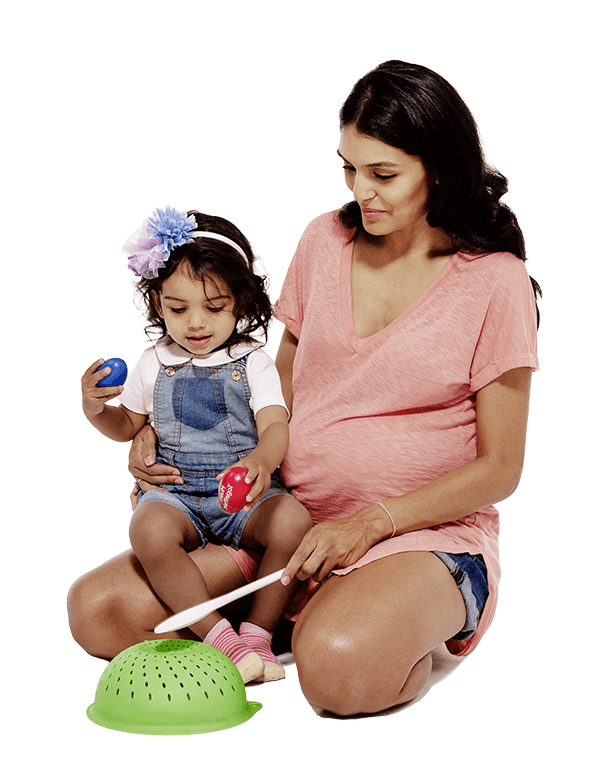
Singing in the car, jamming on plastic bowl “drums,” dancing as you prep dinner . . . making music with your little ones brings smiles and giggles from everyone. A bonus? Even simple music activities like these support your child’s learning in all kinds of ways. That includes fostering important social and emotional skills like self-regulation, self-confidence, leadership skills, social skills, self-awareness, and empathy. Read on for a peek into some of the research and a few expert-designed music activities that can super-charge the learning.
A Look at (Some of) the Research
Many research studies support what Music Together® teachers and parents see every day. Making music in a group helps children develop many of the skills they’ll need as they grow: how to interact with others, regulate their behavior and emotions, and much more.
One study[i] found that preschoolers who engaged in group music and movement activities showed greater group cooperation, and prosocial behaviors when compared to children who didn’t engage in the same music activities. In other words, singing and dancing together led to increased empathy for the group of music-makers.
Even in infancy[ii], music interactions can lead to better communication and increased emotional and social connection between the adult and the child.
Two more recent studies involved children in Music Together classes. In the first, researchers from USC’s Thornton School of Music found that participation in Music Together was positively associated with helping, sharing, and comforting behaviors in children between the ages of 3 and 4[v]. The second study found that children who took Music Together classes for two years showed greater self-regulation skills at age 3 than those who did not participate in Music Together[vii].
Music Activities to Support Social-Emotional Learning
The takeaway? Know that as your family enjoys making music, you’re also supporting your kiddos’ social and emotional growth! Here are some music activities that specifically support a few areas of socio-emotional learning. And remember, it’s OK if you don’t think of yourself as a great singer or dancer. All that matters is that you have fun playing musically with your littles.
Self-regulation and Impulse Control
Play with stops and freezes at the ends of songs:
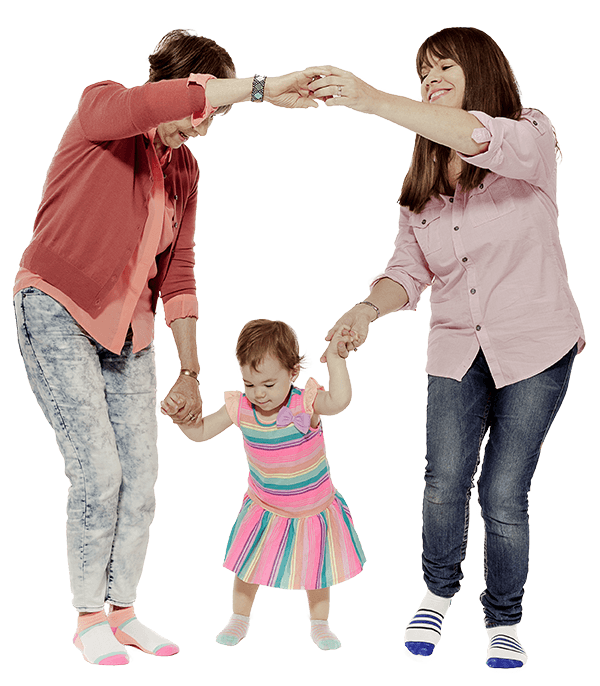
This is a fun way for children to practice the crucial skill of impulse control in daily life. Try it with a song like “Pop! Goes the Weasel!” from this semester’s Music Together® Sticks Song Collection, or any familiar song. As you sing, try freezing at the end of the phrase and see what happens. This game requires your child to resist the impulse to move. It’s the same concept at work in the popular preschool game, “Red Light, Green Light.”
Songs that change tempo (e.g., they get faster and slower):
These are also great for supporting self-regulation skills. Dancing to “Don Alfredo baila” (Sticks Song Collection) is ideal for this, since the tempo gets faster . . . and faster . . . and faster. As you all (try to!) match your dance moves to the speed of the song, older children (3’s and 4’s) are probably paying attention to what’s changing and will likely speed up their actions in response, both important for developing self-regulation. (P.S. They’ll also find it especially hilarious when you “mess up!”)
Self-confidence and Leadership Skills
Ask your child to lead YOU in a favorite song:
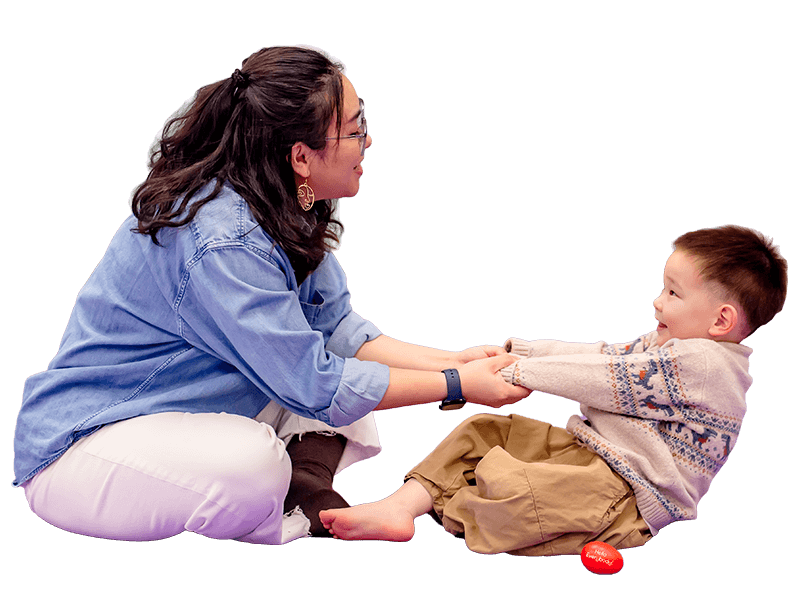
Follow their lead, whether they get the lyrics or melody “right” or not. This simple activity gives them a chance to be the leader and supports their self-confidence as they see that their way of interpreting the song is accepted and embraced by you.
Songs that ask children to come up with their own words or sounds:
These also support self-confidence and leadership skills. Try it with a song like “Mary Wore a Red Dress” (Sticks Song Collection). Ask your child to sing about what THEY are wearing that day, or to create a verse describing what they like to do (e.g., Leo likes to build blocks, build blocks). Or, cue up “One Little Owl” (Family Favorites®) and ask your child what animal can go in the tree and what sound they might make.
Social Skills and Empathy
Group-making:
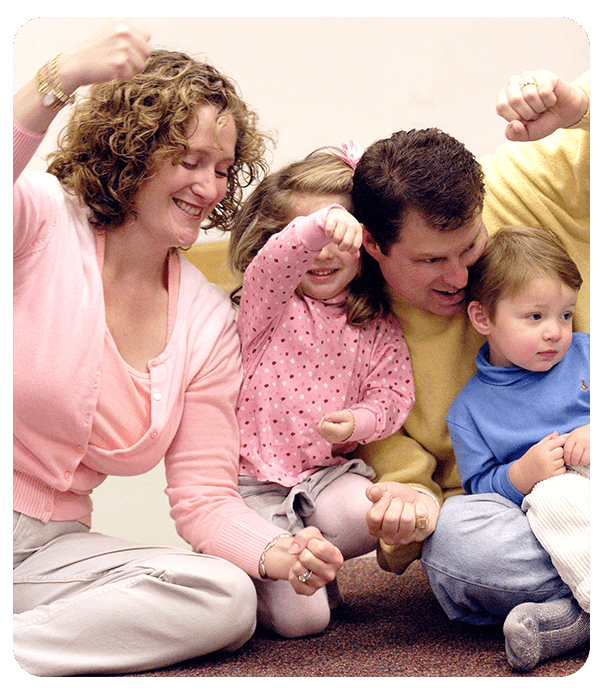
Group music-making teaches children that music is something that can be enjoyed by many people at once. Music is a social experience! A partner song, where you and your child hold hands or lap bounce together, is a chance to experience the song by sharing the movement with a partner. Turn your lap into a car and take your child on a musical drive with Music Together classic “Ridin’ in the Car” (Sticks Song Collection and Family Favorites®). In these types of activities, children learn respect, collaboration and how to work as a team, all while having fun with the music.
Instrumental Play-alongs:
Try some instrumental play-alongs at home, too. It’s super-simple: Put on your favorite tunes, give each family member an instrument (plastic bowls or cardboard boxes can be great drums), and rock out together!
As you sing, jam, move, and laugh together, your child isn’t just having a blast; they’re building self-regulation, confidence, leadership, and social skills, too. So next time you’re looking for a fresh family activity, try a few of these. You’ll be making memories AND giving their social-emotional learning a boost—one musical moment at a time.
References
[i] Kirschner, S. & Tomasello, M. (2010). Joint music-making promotes prosocial behavior in 4-year-old children. Evolution and Human Behavior, 31: 354–364.
[ii] Gerry, D., Unrau, A., & Trainor, L. J. (2012). Active music classes in infancy enhance musical, communicative and social development. Developmental Science, 15(3): 398–407.
[iii] Cirelli, L.K., K. M. Einarson., L.J. Trainor (2014). Interpersonal synchrony increases prosocial behavior in infants. Developmental Science. 17(6): 1003–1011.
[iv] Gaudette-Leblanc, A., Boucher, H., Bedard-Bryere, F., Pearson, J., Bolduc, J., & Tarabulsy, G.M. (2021). Participation in an early childhood music programme and socioemotional development: A meta-analysis. International Journal of Music in Early Childhood, 16(2): 131–153. https://doi.org/10.1386/ijmec_00032_1
[v] Ilari, B., Helfter, S., & Huynh, T. (2020) Associations between musical participation and young children’s prosocial behaviors. Journal of Research in Music Education, 67(4): 399–412. https://doi.org/10.1177/0022429419878169
[vi] Ma, X., Xiong, Zhang, S.-Q., Zhang, X.-Y., Hu., Q-J, Shang Li., and Y.-C. Tao, (2024). Influence of musical activities on the prosocial behaviors of preschool children. Psychology of Music, 52(5): 595–607. https://doi.org/10.1177/03057356231213800
[vii] Smith, A., McGregor, C., Carr, K., Epstein, L., Serwatka, C., Paluch, R., Piazza, J., Shisler, S., and Kong, K. (2023). The impact of a music enrichment program during infancy and early toddlerhood on effortful control at age 3: A preliminary investigation. Infancy, 29(1): 72–79. https://doi.org:/10.1111/infa.12563
[viii] Williams, K. E., & Berthelsen, D. (2019). Implementation of a rhythm and movement intervention to support self-regulation skills of preschool-aged children in disadvantaged communities. Psychology of Music, 47(6): 800–820. https://doi.org/10.1177/0305735619861
[ix] Winsler, A., A. Koury. (2011) Singing one’s way to self-regulation: the role of early music and movement curricula and private speech. Early Education and Development, 22(2): 274–304.